

Work Experience Spring 2026
In the spring of 2026, we organised work experience for Year 10 students at the Derby Museums. This included activities at the Museum of Making, The Museum and Art Gallery, and Pickford’s House.
Fatima and Rebeccs’ Work Experience Blog:
Day 1: Museum of Making (MOM)
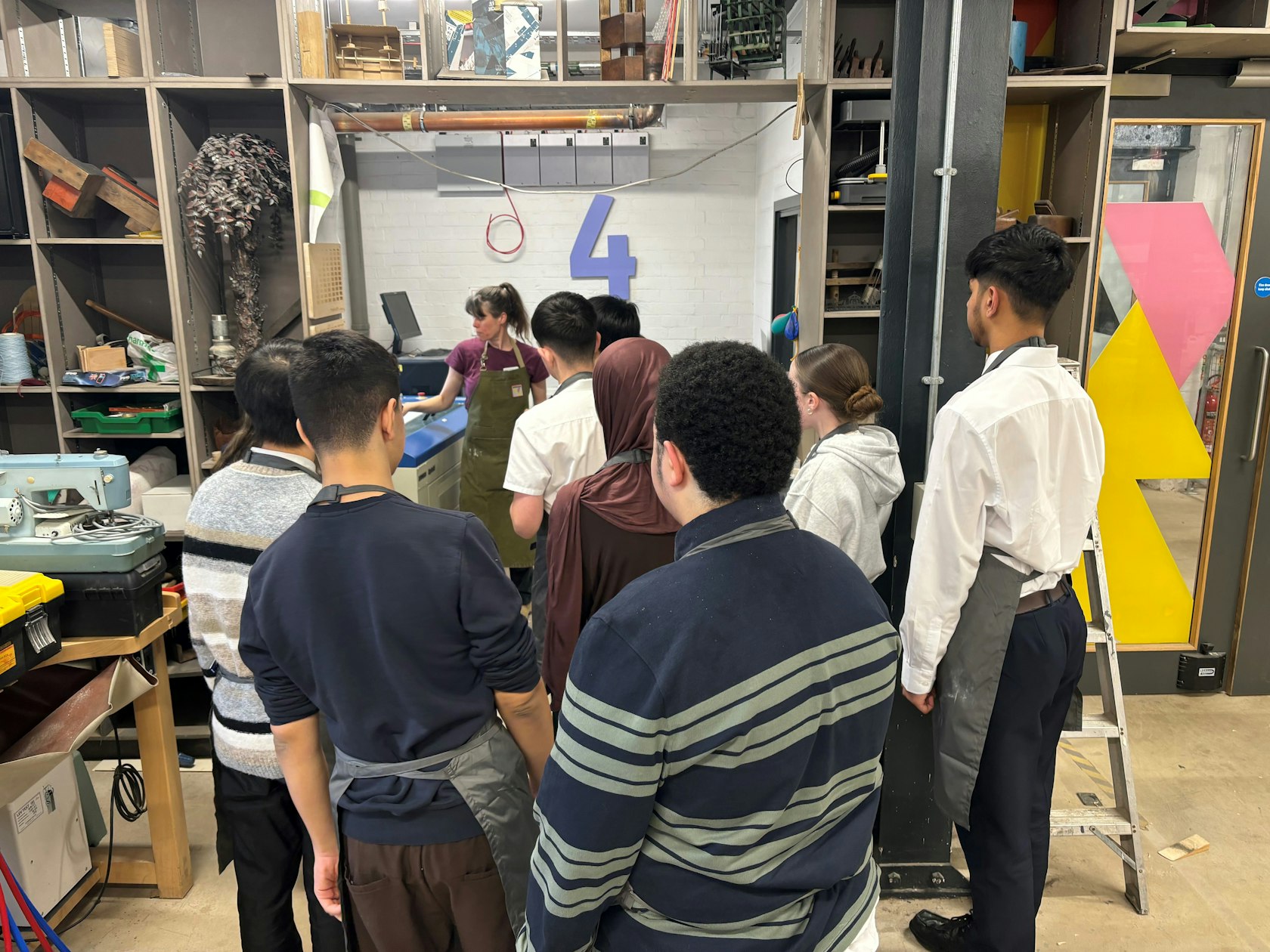
The first day we had an introduction to meet some of the staff and get our timetables for the week. We talked with Hope the volunteering coordinator to understand their role and found something that we liked from the museum to research and write a poem about or draw a picture of. After lunch, we did a workshop activity where we created our own name tags which I really enjoyed, then created stamps with our own designs on them which the workshop can use.
Day 2: Museum and Art Gallery (MAG)
On the second day we had a tour of the Museum and Art Gallery which was really interesting as it gave us more of an idea of the history behind the items stored there, then we had a talk about what activities are held at the museum and how it can help young children. After lunch we walked to Pickford’s house where we got a tour from one of the staff at the building. After we had a look through Pickford’s house, we walked to the Museum of Making and were able to pick some objects that interested us the most and research them.
Day 3: (MAG)
On the third day we arrived at the Museum and Art Gallery where we worked with a member of staff from the curator’s team. We had a tour of the human nature exhibit where we understood a deeper reasoning behind why it was made, then after we had lunch, we were able to walk around it on our own and we read through the feedback wall. We got to write what we personally think went well and things we thought would go better to help the team with any changes that they might need to make. Then nearer the end of the day we picked an item we liked and had researched so we could write a label for it.
Day 4: (MOM)
On the fourth day I worked with a member of staff from the marketing team where we saw the behind the scenes of their social media platforms and were able to make a post for Facebook and Instagram about an item we found most interesting to research. In the afternoon we went onto Canva and made a poster for an event for a bit of fun and to experience what they do in order to create posters for up coming events.
Day 5: (MOM)
On the last day we wrote up a blog of what we did throughout the week. Overall, I really enjoyed this experience as it expanded my knowledge on the history of Derby and has encouraged me to want to visit again with my family in the future. The human nature exhibit is truly eye opening as it shows you the impacts of pollution and fast fashion and the long term affects it has on our world.

Thomas:
 Monday
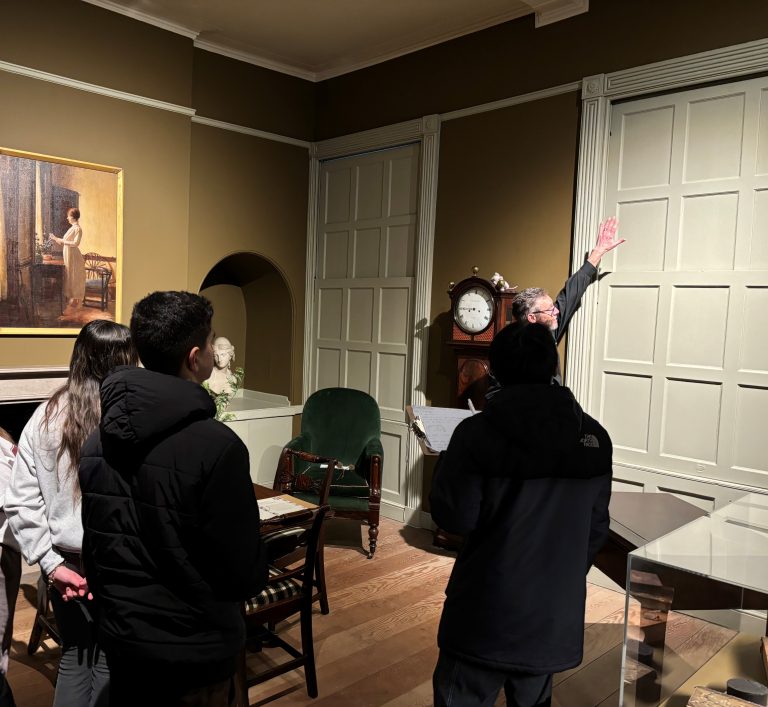
On Monday, we were stationed at the Museum of Making, and we had a debrief of the rules and expectations we had to follow to make our experience as safe as possible. After that, John talked to us about the history of Derby and what it might have looked like back in different eras such as the Egyptian times. After the talk, Hope from the Volunteering team had a chat with us about what happens during volunteering and what you can do. We then did an activity where we had to find an object we felt connected to and write a story, story line or draw a story board about it. I chose the Tomb Raider game because it was originally made in Derby. After lunch, we went to the workshop and created name tags for ourselves. We used Jesmonite to make it. While it was setting, we made plaster stamps for people to use during pottery. We then had a tour of the workshop to see what was in there.
I learnt about the model railway and how much effort volunteers put into making the model. I also learnt about how the workshop at the Museum of Making is used and that it is open to the public. Lastly, I learnt about the history of a few artefacts and had a history of Derby talk. I enjoyed looking at artefacts around the MoM and I loved learning about the model railway as it was interesting. I also liked talking to staff and seeing how they got into their line of work and why it interests them.
Tuesday
On Tuesday, we met at the Museum and Art Gallery and we had a tour. We went to all the exhibits and even poked our heads into the new exhibit that will be opening soon. We were taught about artefacts such as the big log boat and the big Hippo skeleton that was found in Derby. After this, we did a trail activity where we found a couple of objects in MAG and we started to create a trail that was designed for our target audience range. After we walked to Pickford’s House and had a tour. We also did the activity task and picked a couple of objects. It was good to go to Pickford’s House as I have never been before, and it was nice to look into the work of Joseph Pickford and his Georgian lifestyle. After the tour of Pickford’s, we went to the Museum of Making and we again did the same activity there. We had a tour of MOM and looked at many different artefacts around many galleries.
I learnt about Pickford’s and how a typical Georgian household may have looked. I also liked learning about Joseph Wright and his paintings. This includes the model Orrery. Lastly, I learned about machines such as the big silk machines and the big engine at MOM. I liked looking at the pieces at the 3 different museums. I also liked the tours as I looked at the museums in depth, which made me feel privileged because it is not open to the public.
Wednesday
On Wednesday, we met at the Museum and Art gallery again. We split into teams and looked into different aspects of the museum. There was curation, fundraising and learning. I was in fundraising and I really enjoyed it. Me and my team were tasked with writing down or taking pictures of what we liked about the galleries and what needs improving. After this, we had a breakdown of the event taking place in a few weeks’ time, and it was to show us how planned out an event is. After that, we went and did our own tasks. Someone hot glued plastic leaves to a tree, someone cut out seeded paper for the “Thank you for coming” letters and I was counting champagne flutes for welcome drinks. After I did this, I helped sew together the seeded paper for the rest of the day.
This was my favourite day as I got to see the MAG in more depth and did activities that I have never done before. I learnt about the effort that goes into fund-raising and how important it is to the organisation. I also learnt how the funds are spent and what aspects of the museum they go into. I also learnt about The Wardwick and the storage room. I liked counting the champagne flutes because I felt independent. I also liked learning about the behind the scenes and looking at the range of artefacts in MAG.
Thursday
On Thursday, we met at the Museum of Making and we split into teams again. There was learning, venue hire, marketing and retail. I was in venue hire and there was a lot of writing and logistics. We did a few activities on function sheets and we made our own event and planned it too. The staff member who was running the tasks gave us a talk and it made me understand how much thought goes into venue hire.
I learnt about the massive amount of effort that goes into venue hire and different ways they can be hired out. E.g. a conference or wedding. I also learnt about how an event can be planned and what needs to be considered to make the venue hire successful, such as room layout and welcome drinks. Lastly, I learnt all about a function sheet and how much importance it has to the staff who are setting up. I liked working on the laptops. I also liked meeting Lisa (the venue hire staff coordinator) as she was nice and really helpful.
Friday
On Friday, we met at the Museum of Making and we were all together in one group. We started writing the blog posts and doing our admin work that we couldn’t do during the week. After that, we did electro-embroidery with Clare. I learnt about the finances of the museum and the boss of the organisation. I also learnt how to make a blog post.
Overall, I really enjoyed this week as I learnt a lot more about museums and how much effort goes into running events. I really liked this experience because it has taught me new skills like talking to people I have never met before. I really liked meeting the staff who ran the teams I was in because they were nice, friendly and they helped me find my bearings around the tasks as well. One thing I loved was the fundraising tasks because they were fun and I never got bored. One thing I would improve is the physical parts of all the museums (especially MAG) as a few exhibits had a few damaged areas such as the wallpaper in the Soldiers story. But other than that, I really enjoyed the experience and if I had the choice to redo this week, I would.


Wallace:
Day 1
For day one, I arrived at the Museum of Making at 9:30am, where the volunteer coordinator gave us a thoughtful talk about volunteering in Derby museums. I learnt that volunteering can not only broaden my horizons but also help my sixth form and university application in the future. After a thoughtful speech about volunteering, we moved our footsteps to the workshops. We made some name tags and contributed to the workshop by making stamps for people in pottery class. I really enjoyed this activity, as it let us have the opportunity to do some practical work. I also learnt the importance of the workshop for making replicas of museum artefacts. This can benefit the public by allowing them to interact with the artefact without damaging the original object. The workshop can also help the museum generate income by offering sessions to the public. Overall, the first day was thoughtful and interesting.
DAY 2
For day two, we gathered at the Museum and Art Gallery at 9:30am. We are told we would have a tour of the three museums. We also needed to write a trail for the museums. A trail is a guide for different target audiences to guide themselves around the museum. It contains a variety of illustrations and interesting questions. It can also generate income for the museum. We walked through three different museums in Derby and created a trail by ourselves. Out of those three museums, I liked Pickford’s house the most. The Pickford house shows the home of wealthy people in the Edwardian Era. It is very different from other museums in comparison. It provides a full picture of people’s daily life in that house at the time. We evaluated our trail after visiting the three museums. Overall, it was a meaningful day.
DAY 3 – Morning.
For day three, we explored different aspects and job roles in the museum. I chose learning for this day. I needed to assist a primary school visit session about the Vikings with 30 KS2 students. They were pretty enthusiastic and didn’t really listen to instructions! It is very hard to manage 30 students. The museums give interactive sessions to the kids. This one was about exploring the fascinating history of Anglo-Saxons. I learned that teaching is very hard, as you need a lot of patience. Also, it involves setting up and clearing up the lesson environment.
Day 3 – Afternoon
In the afternoon, I went back to the Museum of Making to look at the behind-the-scenes of the educator’s work. We tried to develop an interactive artefact for the public and experimented with its possibilities. I learned that educators not only face children but also educate people of different ages. We also helped to set up a school visit session for the next day by cutting paperboards and moving chairs and tables. I learned that educators are not only planning their lessons but also doing their preparation practically. I really enjoyed this day, as I like to interact with children and respect teachers and educators more, as they are very professional.
Day 4
For day 4, we explored other aspects and job roles in the museum. I chose marketing for this day. I learnt how marketing is important for museums. It generates income and promotes museums by using interesting social media posts and interacting with people. Promoting the restaurants and shops in the museums is also part of their job. They also need to track social media followers and report to the manager. I created a social media post with an interesting hook that introduced the Railway Model in the Museum of Making. I learned how to use Hootsuite to create a catchy social media post. I realised you needs a lot of knowledge and skill to write a good social media post. It requires communication skills, writing skills, photography skills and creativity.
In the afternoon, I created a poster for a museum event using Canvas. This is the first time I did a project designing posters. I learned how to use Canvas to create logos and patterns. It requires computer skills and creativity to create a poster. I learned that marketing jobs need people with multiple skills who can be flexible in any situation.
Day 5
We received a talk from the CEO of Derby museums where he shared his entrepreneurship values and experience with us and explained how perseverance can lead to success. He also shared the financial side of the museum and how museums keep balance financially. Later, we created a blog to summarise and recall our whole work experience. I want to thank Kathryn for giving me this amazing opportunity to have wonderful work experience in Derby museums. Kathryn also planned a fascinating and educational experience for this short week and I will miss and remember this experience in the future. I feel I have grown a lot this week. It was a special experience compared to mundane school life. This gave me an insight into career roles in museums and the workplace environment.

Hao:
For my Year 10 work experience I chose the Derby Museums. I had the following 5 days to experience and volunteer at the Museum of Making, the Museum and Art Gallery and the Pickford house. I have enjoyed the work experience as I have learned multiple skills and learned more about where I live in Derby.
Day 1 MON
On Day 1 my first arrival for work experience was situated at the Museum of Making. There were 10 people along for work experience and we were all introduced to Kathryn who led the work experience annually. We went to the studio to learn some history with John and did creative writing with Hope, making stories about the artefacts around the museum. We wanted to make them seem more alive and tell the story of how they got to the museum. After the session ended, we had LUNCHBREAK!! We went to the museums’ own workshop where people could hire certain machines for wood and metal work. The guide there showed us a badge we needed to make for identification for the volunteering we’d be doing on Wednesday and Thursday.
Day 2 TUE
On Day 2 we went to the Museum and Art Gallery. The staff let us around the museum freely to get used to the surroundings and layout. Afterwards, the staff showed us the path trail they used for each museum to raise money for future projects and exhibits. We needed to create a new trail of 2 artefacts in each museum for them to use. We went to the Pickford House after on foot where there was a Dracula display, Paper theatres, Servants quarters and a garden. We went back to the Museum of Making and completed the path trail for the afternoon.
Day 3 WED
On Day 3 at the Museum Art and Gallery we were split up into different groups where we all did either Fund-raising, Learning, Marketing, Curating or Retail. I was split up with Zain and Thomas where we talked with Helen who arranges the events for fund-raising. She explained that the museum is hired for events to raise money for projects but since the government funds have gone down, they would need to spend wisely on what needed to be arranged. Helen then gave tasks to prepare for an upcoming event for the anniversary of a stuffed fox, and to give thanks to the sponsors that would be at the event. Zain was assigned to glue leaves onto fake branches for the entrance. Thomas needed to count the amount of champagne glasses in storage and I was supposed to make fox cut outs out of seeded paper. The paper cut out press wasn’t working so I sewed together the greeting papers which would be environmentally friendly. Thomas soon joined later and we managed to make 36 letters.
Day 4 THUR
Day 4 was the most tiring day so far. At the Museum of Making we were doing the same thing as we did at the Museum Art Gallery but in a different group. I had Zain with me again but in Learning where we had to help out with 90 primary school children in Key Stage 1 for 3 hours. The children made cardboard cut outs using their creativity and had to make them stand up properly for a project they needed to do back at their school. After 3 hours of back stabbing pain we did a mini activity where we tried to make a corn doll out of paper straws but we only could do the 4 straw version not the 5 version.
Day 5 FRI
We’re all writing our blogs in a room at the Museum of Making. I have really enjoyed the work experience across the museums I’ve been to. I’ve learned lots of new things and I recommend people to do work experience at the Derby museums.


Annabel:
Monday
On Monday morning we had an introduction with John and Kathryn about what we will be doing over the week. We also looked at some old artefacts and tried to guess what they were. Before lunch we drew and wrote about a stain object we chose. When we came back from lunch we went down to the workshop and made name tags for ourselves. While they were drying, we made some stamp moulds out of clay. I enjoyed moulding them and putting different patterns in them. Once we had made the moulds, they were filled with plaster and left to harden into stamps. When our name badges had hardened, we filled them to make it more even and so the words were more visible.
Tuesday
On Tuesday we had a tour of The Museum of Making and explored around using our trip booklets to answer questions and clues whilst choosing two objects we liked. We continued our trail and individually looked around for any artefacts that we specifically liked or felt connected towards. After lunch we had a man tell us the history of Pickford house and show us all the rooms, we then continued our trail booklet and picking two objects we liked the most within Pickford house. Then we went to the Museum of Making and had a full tour of the building. Towards the end of the day we finished our trail booklet.
Wednesday
On Wednesday we helped the children learn about the Vikings and Anglo Saxons and helped them with activities and showed them special artefacts from Viking and Saxon times. When we got back to the Museum of Making we set up tables for the school that was coming the next day and got some sewing and cardboard for them to cut up. We also made some corn dollies out of straw although it didn’t turn out as good as we thought it would.
Thursday
On Thursday we learnt about the corporate side of things, including events such as weddings that can take place in the museums. After lunch we planned a birthday party for my 18th birthday, considering how many people would attend, what we wanted to be there and food and drinks.
Friday
On Friday we made our blogs about our experience.


Zain:
My week with Derby Museums overall was fantastic. It was great to meet the staff and work behind the scenes in projects with the different teams.
Day 1
The first day was in the Museum of Making, in which Kathryn introduced us to the teams. We learnt about the history of Derby with John and did work in volunteering with Hope and made name badges in the workshop with Julian. In volunteering, we learnt about the different stories that objects may have and wrote one ourselves – mine was about the Eagle VIII engine. In the workshop, we learnt how clay modelling can be used as moulds for other projects.
Day 2
Day 2 was in the Museum and Art Gallery, in which we had a tour and started a trail made by Rachael. This trail continued into Pickford’s House, where we also had a tour and learnt about the lives his family lived and what Georgian life was like for the wealthy and for servants. Once we finished this part of the trail, we returned to the Museum of Making to complete the rest of the trail and later started making our own.
Day 3
From day 3 onwards, we were split up into groups so we can work in our teams of choice within the Museum and Art Gallery. I initially chose retail, but the retail lead was off ill so I settled on fundraising with Hao and Tom. We worked under Helena and discovered what the organisation fundraises for, that being the improved conditions of the museums for the visitors. Once that was done, we helped Helena and Kathryn organise Mr. Fox’s retirement. Hao and Tom sewed the Thank You cards that guests will receive while I made the tree and proceeded to accidentally burn myself a handful of times (“a handful” is an understatement). Sometimes I wonder how many times I would’ve stabbed my hands with a needle and thread solely because of my big hands.
Day 4
This was by far the most exhausting day of my life. Key Stage 1 students came in to visit the Museum of Making and worked under the supervision of John and Rachael’s team, including myself and Hao. The tasks they did consisted of sewing, turning 2D shapes into 3D shapes using cardboard (Hao and I led this) and sewing. There were around 90 children and we took them on 10 at a time. 60 students went through each rotation before lunch and 30 after. Once they left, we started cleaning up, which was a significant change in tempo compared to the previous work. Once the most exhausting parts were complete, we treated ourselves to a creative yet confusing activity – making corn dolls but with paper straws. It took some time but I got the hang of the tying despite my big hands. Since John had a presentation Friday morning, we helped carry over objects like Roman armour and fossils from the Museum and Art Gallery to the Museum of Making.
Day 5
The last day of the week and my second-favourite day of the week overall. We had a short talk and summary of what we did with Kathryn and the Director of Commercial, Tony. Once that ended, we wrote up our blog posts (if you haven’t noticed this is mine).

Ben:
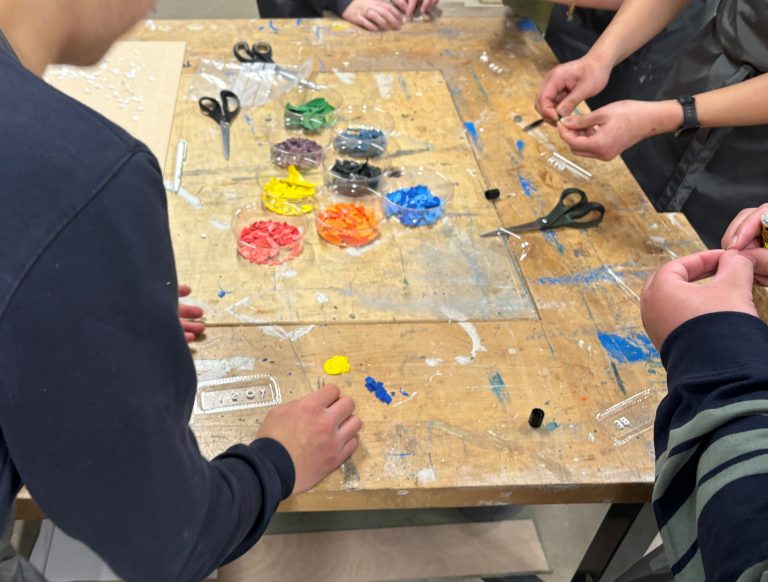
On Monday morning, we went to the Museum of Making and the group was taken to the studios for a quick introduction. We were shown some areas of history the museum focuses on. Staff then brought up some items for us to have a look at, which I enjoyed. A member from the volunteer team then let us pick an item to write a story about to help visitors potentially build a connection with them. I chose to write about the first PlayStation copy of Tomb Raider which is held in the museum.
In the afternoon, we went down to the public workshop, where we made custom nameplates with special colours using delicate material and patches made from plaster and clay. I personally think I could’ve done better with the nameplate. We got really creative with the patches, using different tools to design shapes on the clay.
On Tuesday morning, we went to the Museum and Art Gallery, a different location nearby. We were given a tour, and a debate was brought up on whether foreign artefacts should be sent back to their places of origin, as we were going through the World Collection Gallery. After the tour, we started making our own trails, based on numerous items we’d chosen from the site. Derby Museums are known for doing this.
In the afternoon, we were taken to Pickford’s House, Derby Museums’ third and last site. We were given a tour and picked out more items from the site to implement into our trails. There was a Dracula exhibition held there, which was quite decorative, and a room to commemorate the past servants of the house, who were victims of the slave trade.
Afterwards, we were taken back to the Museum of Making to look at the Assemblage. The Assemblage is amongst the coolest stuff I saw on this work experience. It’s a big room, with a big collection of different items, arranged by a grid. After that, we went back to the studios to complete our trails with items we saw in the Assemblage. I think if I did it again, I’d have used a greater range of questions. I enjoyed noting down items from each site, in turn learning more and more about Derby’s history.
On Wednesday morning, we went to the Museum and Art Gallery again. On this day (and Thursday), we had picked specific teams of the museum we’d individually want to work with. I got picked for the Curating team this day, which although it wasn’t my first choice, was a surprisingly chill day. We helped a Curator staff sort out boxes full of items for the Human Natures exhibition which was pretty easy, then we got to read through visitor feedback of the exhibition and give our own feedback which would be taken to Manchester (where the exhibition would take place next). I particularly liked reading through visitor feedback, seeing what people thought about the exhibition, as I found it to be interesting.
In the afternoon, we each picked an item from the site to write our own physical label on. This involved researching the object online, using computers, and writing up a short description of our item on a card. Afterwards we were able to actually stick them on for a bit and do other various tasks until the end of the day where we took them off.
On Thursday, I was selected to go on the Marketing team. We were based back at the Museum of Making, and this was the day I enjoyed the most, I really liked the tasks we were given. In the morning, we were sent out to gather pictures of anything from around the museum, then make our own drafts for a social media post based on each of the things we captured. We used an efficient site called Hootsuite, which helps a lot with managing post schedules and making your drafts.
In the afternoon, we were expected to make our own advertisements (whether for social media or physical), using Canva, for the Assemble event by Derby Museums, held in October. This was the task I had the most fun doing. I decided to go for a social media ad/post design. It was interesting to learn about Derby Museums’ brand regulations like specific fonts, logos, preferred pictures, etc. I think I did well with my design, although I think I ran out of time to really consider my design “finished”.
This Friday morning, we met a director at the Museum of Making who oversees the whole organisation. He gave us a rundown of his job and how he got to his position. One good point he brought up was that many workers in this type of industry don’t have specific degrees and you most likely won’t need one.
Overall, I’d say I had a fun experience doing this with Derby Museums, and working for them seems welcoming.
Yosif:
Once I was in the museum, I was in awe. I really liked how the museum had engineering and mechanical vehicles. As we went up to Level 1, the exhibitions caught my attention and all the many historical buildings that were once the very building I was in.
First lesson – I was in studio A, sat down with people from my school and class, then the team placed down items and artefacts, such as a prehistoric sharpened stone and a single mammoth tooth which was the size of my head! I loved learning about prehistoric animals and tools that were found in the city I lived in and walked on.
First meeting the team – After inspecting and figuring out the items and tools they placed on the table, a person named John Banks, who I liked during the week of the work experience, was showing us the vast significance and history of Derby and famous people such as Erasmus Darwin and how the river Derwent was a significant factor of Derby’s expansion.
After lunch, the group and I went to the workshop where the workshop manager Gillian guided us to a place where we made a box out of clay with tools such as a rolling pin, a knife and some sticks that help flatten the clay. I made a box with intricate patterns, then Gillian poured a white liquid that hardened over time.
Day 2
Instead of the Museum of Making, I went to the Museum and Art Gallery. Kathryn guided us throughout the day, many artefacts and some fossils really caught my attention and made me wonder about how Derby used to have many ecosystems during prehistoric times such as the Allenton hippo which is where I live.
As we went to the Wardwick, the team gave us a trail which Rachel had made. We had to follow the instructions on where to go which involved trying to find hats in the many exhibitions and try to answer as many questions as we can, after that I made my own trail which involved the Ichthyosaur and how similar it is to the Dolphin.
After lunch, Kathryn walked us to Pickford’s house, it was the last place of the museums in Derby and once I got in, it was a bit tiny but it was still interesting knowing that this used to be the home of many people and now is a museum for everyone to visit. A person named Paul who worked at the museum guided us to the rooms of the house and who Pickford was. We followed the trails to see the exhibitions and do questions such as designing from the items in the museum.
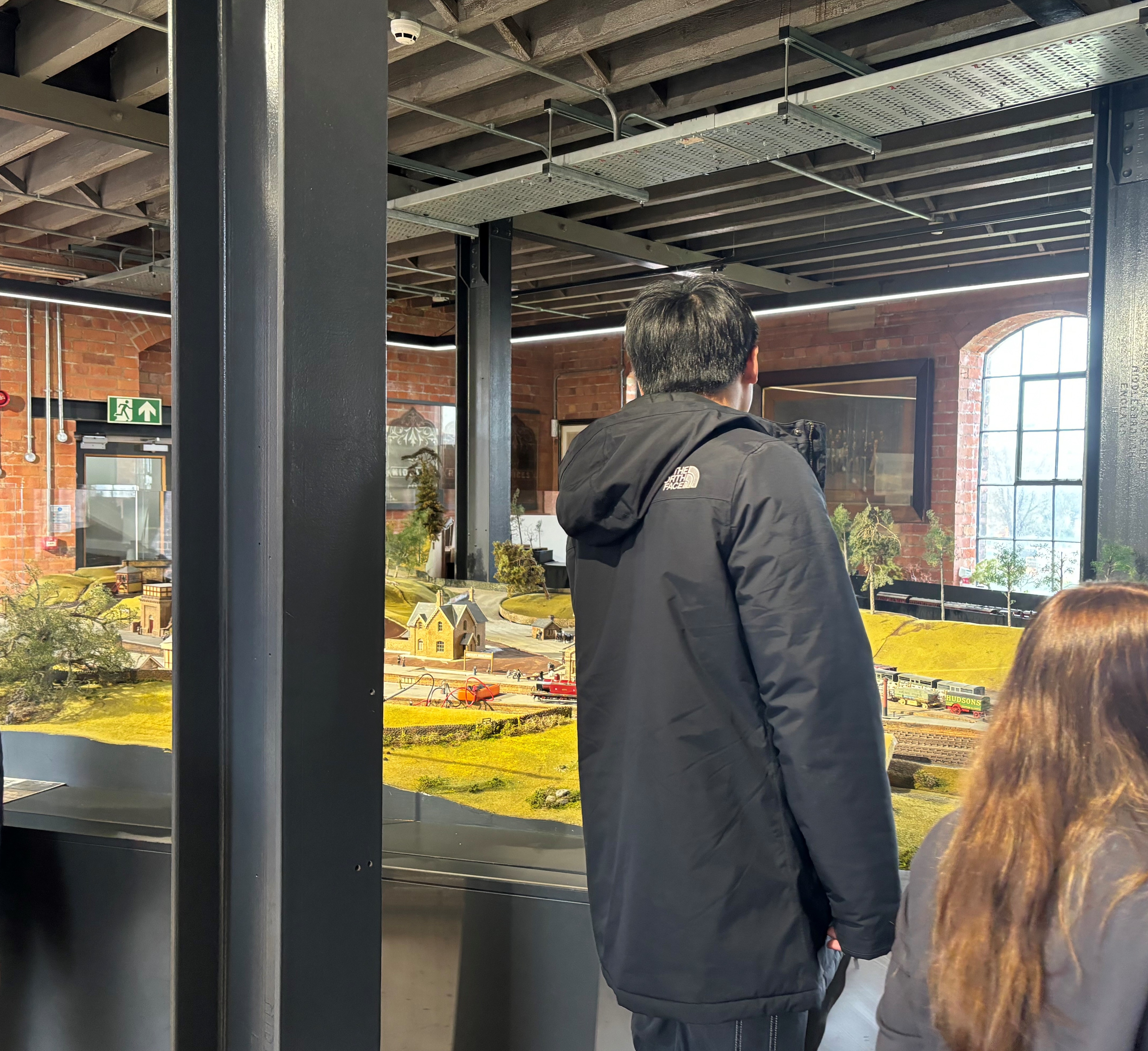
Around 2pm we went back to the Museum of Making where we saw more of the stuff they had to offer, such as the realistic train mini scale exhibition which was all done by hand and one of the volunteers turned on the trains and made them move, it was very nice and exciting.
We did the rails on the Museum of Making where we had to go to an assemblage and pick an object we liked the most and draw it, I picked the train and drew it but I didn’t get to finish it. There were many cool items in the assemblage as well as signs, some of them were funny and there was even a small train about the size of a medium sized dog and it even works.
Day 3
We went to the Museum and Art Gallery again and did learning with John and Rachel, the rest of the group had to pick a team to work with and I picked Learning. I was in a team of 4 people with Wallace, Annabel and Olivia.
In the first session me and my team helped with a class of Year 6s and helped prepare their lesson about the Vikings, along with helping the teachers Sarah and Tricia with Viking activities such as trading.
After that I helped John pack away the rest of the lesson and we went for lunch.
In the afternoon, we went back to the Museum of Making and got to do Corn dollies which originally was an act believed to ensure fertility for the future crops. And it involved makings holes in corners of the shapes we drew in the wooden base and putting in a long thin bendy piece of wood. We made holes by using the drill in the workshop. After that we were supposed to use the bendy strips of wood, but the museum didn’t have any so we used paper straws and it was quite difficult to finish as the paper straws weren’t long enough so we had to extend them. Even then it was still fun.
Day 4
I arrived at the Museum of Making and went to the river room which was at the end of the gateway, it was like a meeting room. Then the VAs came in and took us to the loft which is where I met Jeff who is the site manager and Alex who is the director of commercial. They did a meeting with me and Fatima and were talking about how they would manage 90 kids in a museum while trying to keep a good experience for the other visitors and I played a role in a meeting and asked them a few questions about any problems and how they deal with them such as floods and maintaining capacity.
In the afternoon I went to the front face and greeted visitors and did some surveys with some of them, while Fatima was also doing surveys with the visitors in the gateway and the assemblage.
After doing the surveys with the visitors, I managed some stocking in the main shop of the museum by counting the amount of products on the shelves and listing them on a sheet. I checked on their numbers, some of them were the same so Lauren, who was the shop keeper, just added them together and I was accurate with everything else.
Day 5
I arrived at the Museum of Making again and there were tables set up next to the main entrance and 2 projectors with John banks on the microphone. Then we went to the loft which was a bit tiring for everyone else but not much for me. In the loft we met Tony who was basically the CEO of the Museum and he talked about things such as work experience and his and other people’s careers. Shortly after he left, we got out the computers and started making a blog about everything we’ve done in this work experience and safe to say it was exciting and fun me for me, learning about the significance of Derby and going around different museums.