

Erth Maker Story Keyrings & Mammoth Tooth
Welcome back to the Workshop blog. We are starting to see rain, it’s August.
The Museum of Making Workshop has been open in its current iteration since 2021. A large part of its focus is providing a resource of equipment, sharing expertise and enabling people to make. We see some Makers every now and again, some for a particular project only once, and sometimes we have the privilege of working with a Maker over a number of months, or in this case, a number of years.

Erth | Sane Mafa | Maker Story
Sane is a Maker we see regularly in the Workshop. She works with a large range of processes, and is always keen to learn and get new equipment in her hands. We have seen Sane’s work develop over time, since 2021! Sane started at the Museum of Making as a Maker in Residence where she received paid usage of the Workshop and an in house studio to work in. We value her experienced voice as a long-standing user of the Workshop, so we were eager to have Sane contribute her interesting work and making-story to the blog. She has graciously provided us with a look into her perspective as a Workshop Maker.


Sane Mafa:
Studio Mafa
‘Designer, material innovator and co-founder of Studio Mafa, an interior design studio focused on creating considered spaces that support health and wellbeing.

From Material Experiment to Making Erth
For the past three years, the Workshop at the Museum of Making has played an important part in a slightly different side of my design practice: the development of Erth, a new material made using cow manure.
Erth began with a question around how we could look differently at the materials already around us and turn what is often considered waste into something useful, beautiful and valuable.
Since those early experiments, the material has developed significantly. We are now exploring its application across interiors, decorative objects and a growing collection of homeware.

Learning through making
Developing a new material means constantly experimenting.
There have been plenty of prototypes that haven’t worked, processes that have needed changing, and moments where one experiment has led us in a completely unexpected direction. Having access to the Museum of Making Workshop has given us somewhere to actually test those ideas rather than leaving them as concepts on paper.
Over the last three years, I have also learnt skills I never expected to have when we first started developing Erth.
From woodworking and clay modelling to CNC operation, mould making and prototype development, each new process has helped us understand how the material might be shaped, manufactured and eventually used within real products.
One of the things I have particularly enjoyed is becoming more confident as a maker. As a designer, it can be very easy to spend most of your time designing digitally, but physically working with materials gives you a completely different understanding of scale, texture, form and manufacturing.

Developing the Erth collection
More recently, we have been using the Workshop to develop prototypes for our first Erth homeware collection.
This stage has involved exploring forms, producing moulds, testing casting techniques and continually refining how the material behaves.
Because Erth itself is still developing, designing products with it isn’t always a straightforward process. The material often informs the design just as much as the initial idea does. A prototype can reveal a new texture, edge condition or limitation that then changes the direction of the next version.
For me, that is one of the most exciting parts of material innovation: you have to listen to what the material is telling you.

A space to experiment
What has made the Museum of Making particularly valuable throughout this journey is not simply having access to machinery and equipment, but having access to people with an incredible amount of practical knowledge.
The Workshop team have been brilliant.
Whether helping us understand how to operate a piece of machinery, suggesting a different way of producing a mould, problem-solving a prototype or simply allowing us the space to experiment, their support has helped Erth reach the stage it is at today.
There is something very fitting about developing the material here too. The Museum celebrates making, manufacturing and Derby’s history of innovation, while also providing a space for people to experiment with what making could look like in the future.
Erth is still evolving, and there is plenty more for us to learn, but when I look back at our earliest samples compared with what we are able to make today, the progress is huge.
And much of that progress has happened right here in the Workshop.’

The Erth products are testament to Sane and her commitment as a Maker. It is a beautiful, meaningful material shaped in elegant forms. Sane is a positive, inspiring energy in the Workshop and it is always exciting assisting her with a new challenge. This is exactly what the Workshop at the Museum of Making is for; Makers developing their skills and techniques, using a range of equipment and innovating future creations.
Workshop Made | Retail | Keyrings
In the Workshop we have access to a broad range of equipment that enables lots of making. We also have the privilege of working with other departments in Derby Museums on projects where we can put our equipment and skills to good use. Recently, we started work on a number of projects with the retail team under the moniker of Workshop Made (more to follow!..). These items help support and raise the visibility of the Museums, and can provide meaningful souvenirs of visitors’ experiences. We are in the Museum of Making, so it only makes sense that some of the retail items are made here.

Keyrings | Reclaiming Acrylic & Laser
One of the first and achievable ideas was a series of keyrings. The retail team already had materials waiting to be reclaimed and had ideas on what shapes they would like. They had a number of acrylic sheets that were previously used as display shelves in the shop. After discussion with the retail team, we decided on three designs; a Silk Mill, Train Sign and Museum of Making logo. We worked on digital drawings of the designs and made a series of prototypes. The aim was to maintain strength and reduce unnecessary shapes whilst retaining clarity of the intended design. We prepared vector based drawings using software, Illustrator, that were then sent to the laser cutter and engraver.


The retail team put together this short video and text to promote the launch of the keyrings:
See the Keyrings Video here
‘These keyrings have been made from reclaimed materials, by our Workshop technicians, onsite in the Museum of Making Workshop. This is Workshop Made.
Throughout 2023 and 2024 we used bright neon acrylic as part of our retail display units. When some of these displays were retired, we wondered how we could best give the materials a new purpose.
This type of acrylic, called polymethyl methacrylate (PMMA), requires specialised, energy-intensive processes to recycle. Instead, we chose to upcycle it and create a new and sustainable product that would help generate income for Derby Museums.
Working closely with our Workshop technicians, we designed three keyrings, including a silhouette of the iconic Silk Mill, where the Museum of Making now resides; our Museum of Making logo; and a replica of our favourite Midland railway signage.
We’re delighted to produce these original keyrings on-site in our fully equipped public Workshop, located in the world’s first factory. By purchasing one of these keyrings, you are supporting Derby Museums work and helping us to inspire future generations of makers.’


The Keyrings are available for purchase from the Museum of Making shop. All sales help support Derby Museums.
Continuing our breakdown of the Workshop Technician-made Unearthed interactives, this time we wanted to share how we made the replica Mammoth’s Tooth.
Mammoth Tooth | Unearthed Interactive

Unearthed has a section on natural history with a range of ancient animal remains from the area on display. This includes everything from stags to rhinos and in this case a mammoth. Featured is a Molar Mammoth’s Tooth, which is an interesting, tactile looking item. An ideal item for making an interactive copy of!


The first step was completed by the archaeological team who used photogrammetry, a process to make a digital 3D model using overlapping images. This was then used to make a Resin 3D Print which we used as our pattern for the replica.

We segmented the Tooth’s shape into two halves by building a clay wall around the middle. We then used Silicone to create a mould of the shape. Silicone is made from two liquid chemicals which start a reaction when mixed and solidify after some time. First we slowly applied a thinner (blue) Silicone layer to capture the small details of the Tooth. Once dry, we then layered this with the pink silicone that had been thickened with thixotrope. The result is a rubbery and flexible material that can be removed from the original without being damaged.

The Silicone does not hold its shape without support so we made a Jesmonite case to support the form. Jesmonite is a two-part material made from a powder and a water-based acrylic liquid. We held the two mould parts together using old bicycle inner tubes, leaving a pour hole exposed at the top.The next step was pouring liquid Jesmonite into the cured Silicone. There are different types of Jesmonite on the market which enabled us to choose an appropriate colour and texture – one that we hoped would invite visitors to touch the work.
The Jesmonite mixture was combined; then slowly poured as a liquid into the Silicone moulds. This was a team effort as we had to mix and pour the jesmonite in batches whilst also agitating the mould to help eliminate air pockets.

Upcoming Maker Saturdays:
In addition to our regular weekday hours, we open the Workshop on selected Saturdays to Makers!
Every second Saturday of the month.
10am – 4:30pm
September 12th
October 10th
November 14th
December 12th
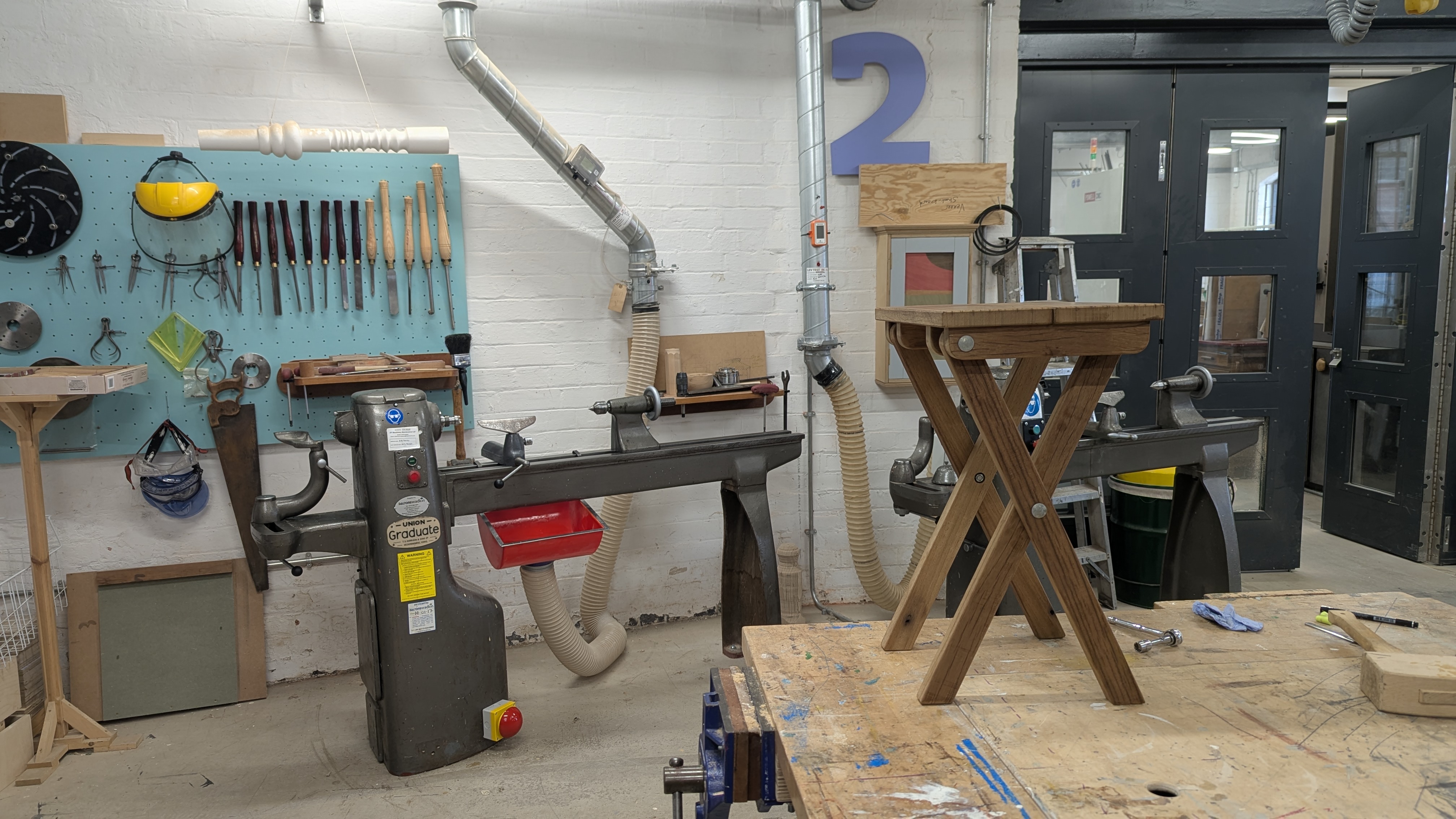
Want to find out more about the Workshop?
Public Workshop at The Museum of Making
Interested in using the Workshop?
Become a Workshop Maker
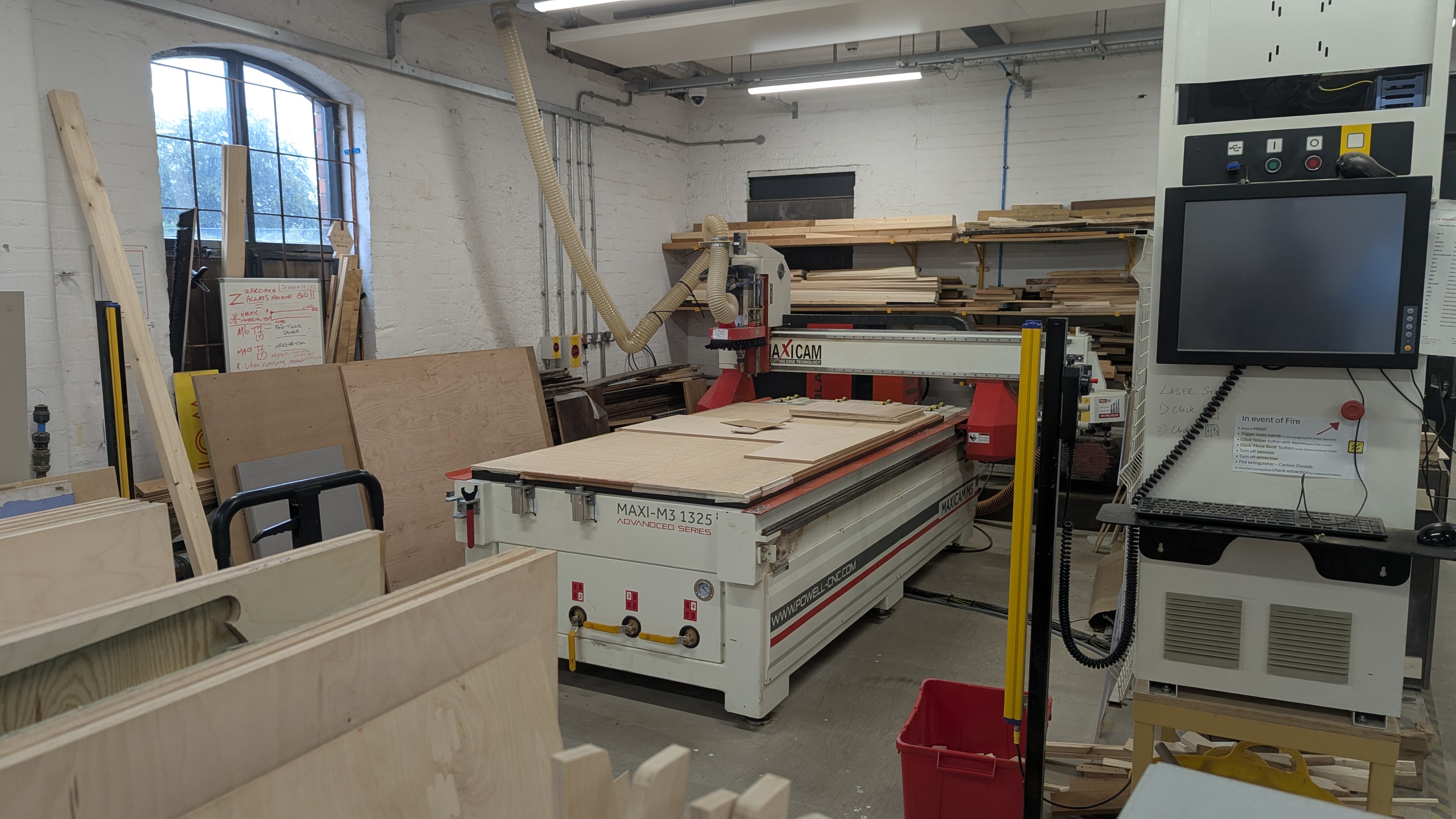
Upcoming Workshop Courses:
- Milk Bottle Mallets | 11th October
- Introduction to Tapestry Weaving | 26 September
- Canvas Making Beginners | 4th November
Course dates to follow:
- Make and use a Drop Spindle
- Blacksmithing – Make a coat hook
- Traditional Upholstery Weekend Workshop
- Basics of CNC Machining and Computer-Aided Programming: Weekend course
Along with the blog, subscribe to our Workshop Newsletter!
The newsletter is a shorter version of our blog in your inbox that will keep you updated.
Subscribe here