


Artist Maker Exhibition & Volunteer V&A Project
Welcome back to the Workshop blog.… It’s July already!
Our Workshop is public, open for adults to sign up and become inducted as a Workshop Maker. We are fortunate to see an amazing, broad range of Makers and their projects in the space. A great example of this is Charlotte Dawson, an artist who worked on elements of her exhibition, If Memory Serves Me Well, in the Workshop earlier this year.
Charlotte had a really strong plan of the outcomes she wanted and much of her time in the Workshop was developing her skills and us giving technical guidance enabling her to realise ideas. To coincide with the launch of her show, July 10th – 20th September, we asked Charlotte to share some words about herself and her work, the items she made in the Workshop and some photographs showing the process.
Charlotte Dawson | Maker Story
If Memory Serves Me Well Exhibition

Charlotte Dawson:
‘About Me
I am an artist working across object-based practice and installation. My practice is influenced by the materials and objects found in public and shared spaces alongside objects that reference collective experiences. My practice is primarily concerned with the implementation of commonplace objects as vessels for memory. Including concepts of souvenir-hood, collections – both personal and historical and the utilisation of objects in the formation of social histories and a building of self.
About the Project
If Memory Serves Me Well is a new commission exploring memory, ritual, loss, and the emotional relationships held within shared spaces. The installation considers how traces of human presence become embedded within everyday environments—from sacred sites and roadside memorials to communal rituals and acts of remembrance.
Using materials associated with fragility and repair, including ceramics, fibreglass, artificial flowers, light, and architectural forms, the exhibition examines the tension between the sacred and the ordinary, inviting visitors to reflect on the emotional residue that remains after people have passed through a place.


Working in the Workshop
The workshop was central to realising several key elements of the exhibition. I built two plinths there, one of which features routed cupboard door motifs that echo the domestic architectural details found throughout the installation.
The biggest part of the workshop process, however, was producing the series of layered window motifs installed high along the back wall of the gallery. These windows create the impression of being outside of and yet shouldering a building, the motifs are taken directly from reference images of Chapel windows and are installed at height to create a distance between the viewer and this internal space. Blurring the boundary between interior and exterior space.

They were made entirely from MDF using the CNC machine. Before starting, I had never used CNC software, so a large part of the process involved learning the programme from scratch. I spent time in the workshop drawing and refining the window designs digitally before working with the workshop team to programme the CNC machine. Once each section had been cut, I carefully layered the individual pieces together to build up the depth and profile of traditional sash windows.
It was a steep learning curve, but having access to the workshop, equipment, and expertise meant I could develop a process that became integral to the finished installation, with the making process itself helping shape the final work.


Behind the Scenes
The photographs document different stages of the making process. From designing the window motifs digitally, CNC cutting the MDF components and assembling the layered window structures before they were installed in the gallery.
Having the time and support to learn new techniques gave me the confidence to push the work further than I could have otherwise, and the workshop became an important part of how If Memory Serves Me Well came into being.’


We enjoyed supporting Charlotte and found the project really inspiring. The Workshop staff have backgrounds and interests in art, so it was a perfect match. Charlotte approached, what can be, daunting work with the CNC, with enthusiasm and got to grips with it quickly. We were pleased to receive the photographs of what is a very well executed exhibition. The windows in particular look super smart. We look forward to seeing Charlotte in the Workshop again!
If Memory Serves Me Well is a free exhibition, from Charlotte Dawson, at Humber Street Gallery, open from 10 July until 20 September. The gallery is wheelchair accessible and open 10:30 am – 5:00 pm Wednesday – Sunday. Humber Street Gallery is a contemporary art space and cultural hub, located in Hull.
In the Workshop we have the honour of working with a highly skilled volunteer team. The volunteers work on a variety of projects, some are independent projects that are achievable in a week and some are longer projects that we as Technicians collaborate with them on. One of these longer projects was a set of cases to enable the safe return of a collection of tables and chairs on loan from the V&A, the Victoria and Albert Museum. This project was brought to us from the Derby Museums Collections team. The project started with work from a Workshop Technician, Tayler, and two of our volunteers (one of which retired as a volunteer during this time). The volunteers led this project, making plans and drawings then directly constructing the boxes and handling the items. Others helped along the way, but volunteer John saw this project through from start to finish, so we approached him to see if would like to give us his voice on the project, as a valued volunteer, which, as you will read, he accepted.
V&A Cases | Volunteer & Technician project

John Panton:
Volunteer | Museum of Making Workshop
‘To put this story into context, I’ll start near the beginning. Way back in the 1960s, the Victoria and Albert Museum kindly loaned to Derby Museums examples of resplendent Regency style furniture, specifically an extending dining table, card tables and upholstered dining chairs, see pictures below. This furniture was on display in Pickford’s House until quite recently. Display changes at Pickford’s House meant that the furniture was no longer required, so it was arranged to return the furniture to the Victoria and Albert, V&A, museum. The cost for packing and shipping the returned furniture was to be borne by Derby Museums.


As you might expect the original transportation containers had long been disposed of and perhaps repurposed into rabbit hutches! Therefore, a quotation was requested from a specialist transportation company to pack and transport the furniture back to the V&A. The quote, not to be specific, was large enough for museum management to take a deep breath and look for options to significantly reduce costs and that’s where the Museum of Making Workshop got involved.
The V&A had provided a packing specification for the furniture, after reviewing the specification, the individual pieces of furniture and taking specialist advice from Derby Museum’s Collection Manager Spencer Bailey, a plan was drawn up where the Workshop would make the transportation containers. Thereby, significantly reducing the overall cost of returning the furniture.
It was agreed that the Workshop would make a prototype container for one of the chairs to make sure our container design met the V&A specification. The prototype container was made flat pack style in the Workshop, then assembled at the Museum and Art Gallery (MAG). The chair was carefully secured in the container with museum grade packing materials by the Workshop team, under the watchful eye of Spencer Bailey. After a detailed inspection, it was agreed that the container and method of packing met the V&A specification and we were to proceed with making the remaining containers.
This was the first time that I had experienced handling antique furniture; I remember thinking about the fabulous condition of the furniture, the deep polished surfaces and the elaborate design details. The furniture was clearly very well designed and made by skilled craftsmen.
The containers were open top and open front boxes, made from 18mm gauge plywood sheet, sat upon rails to aid forklift handling. The furniture was protected and secured with museum grade packing materials and batons; restraining the furniture from movement in all three axes. The containers followed the same basic design, which was sized to accommodate the different sized furniture, see pictures below.


Once the container designs had been created, the sizes of the container sections were transferred to a cutting plan to ensure that we optimised material usage in every plywood sheet, thereby keeping costs to a minimum. After the container sections had been cut (to very exacting dimensions, thank you Tayler Fisher for your precision cuts), the container sections were made into ready-to-assemble flat packs. The flatpacks were transported to the MAG where Tayler and I completed the container assembly and carefully secured the furniture pieces. Spencer periodically checked our progress and compliance to the V&A requirements.
The target completion date was the end of 2025; we completed the project in September 2025. A review of actual costs to make the containers ourselves revealed that we had made a significant saving on the original quotation price.
The project was deeply satisfying in that the talents and resources of the museum came together to create an affordable furniture packing solution that enabled the safe shipment of the furniture back to the V&A. I also got the opportunity to handle the furniture and learn about museum furniture packing, transportation and storage requirements.
The furniture was transported back to the V&A storage facilities; they acknowledged the furniture’s safe return and finally, I received a surprise email from Tony Butler, personally thanking me for my efforts making the containers and helping to manage museum costs; a very proud and satisfying moment for me.’
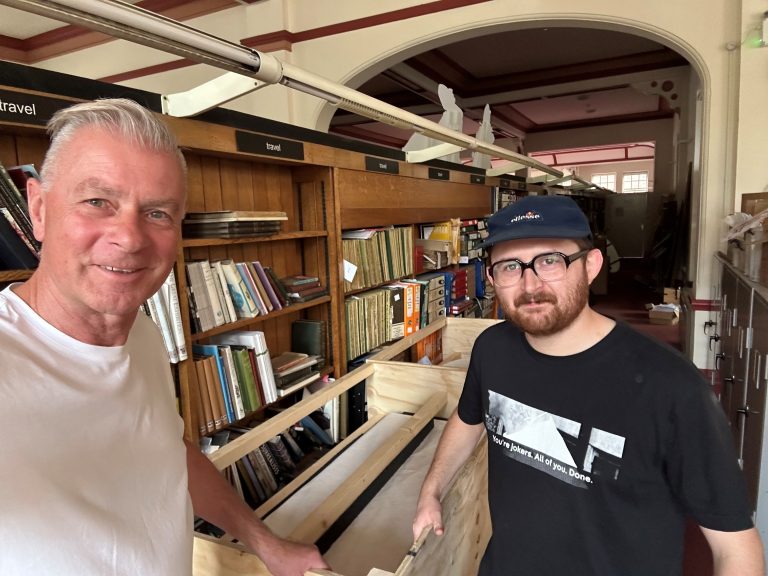
The finished set of cases were excellent, the furniture was more than protected. John does not mention here, but the team at the V&A did commend the high level in which the cases were constructed. As all of our volunteers are, John was a pleasure to work with. John has an eye for detail and dedication which is majorly appreciated in the Workshop. There are plenty of occasions of him staying later than he planned as he prefers a job done well! Like many of our volunteers, we see John weekly in the Workshop, enabling a high level of quality to our output.
Upcoming Maker Saturdays:
In addition to our regular weekday hours, we open the Workshop on selected Saturdays to Makers!
10am – 4:30pm
August 8th
September 12th
October 10th
November 14th
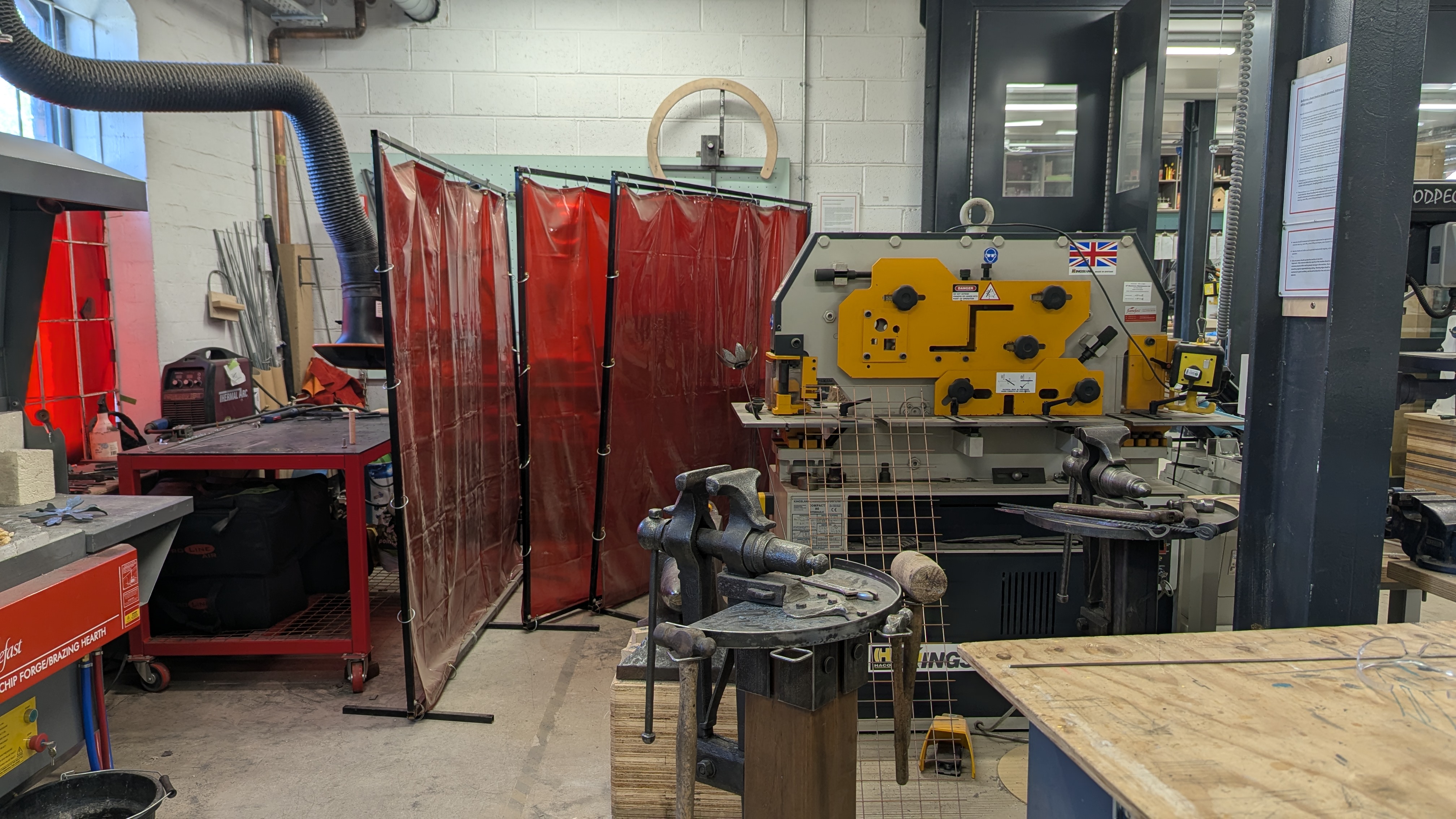
Want to find out more about the Workshop?
Public Workshop at The Museum of Making
Interested in using the Workshop?
Become a Workshop Maker
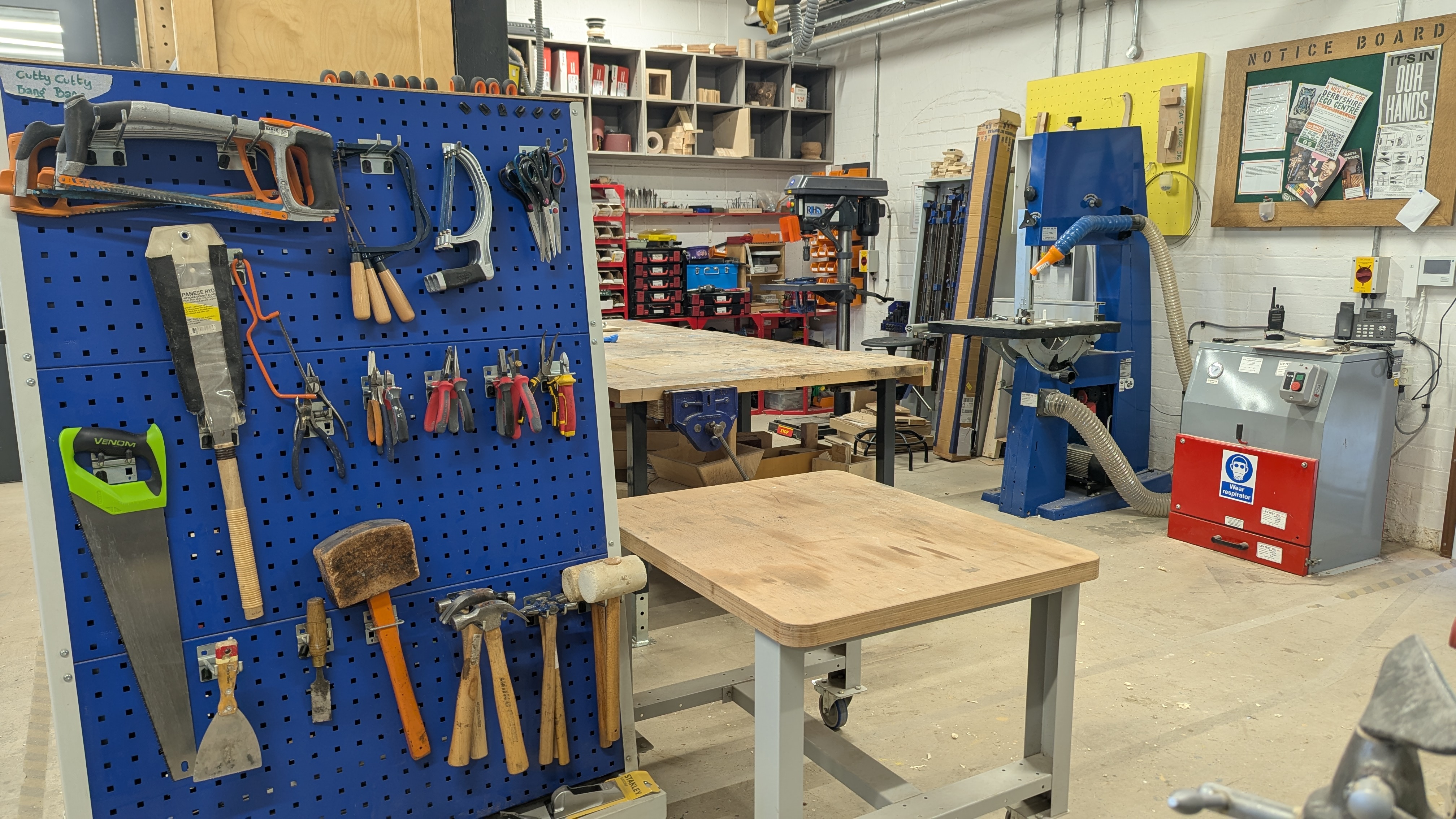
Upcoming Workshop Courses:
- Canvas Making for Beginners Workshop | 15th August
- Lino-Printed Lampshade Workshop | 22nd August
- Milk Bottle Mallets | 11th October
Along with the blog, subscribe to our Workshop Newsletter!
The newsletter is a shorter version of our blog in your inbox that will keep you updated.